이정범 · 2026-09-24 · EN / KR
The Dark Magic of the Mosaic: How Censorship Pixelation Made the World Crueler and More Obscene
From blurring ordinary kitchen knives into horrific murder weapons to East Asian penal codes mandating the physical destruction of adult creative works, this essay explores the cognitive paradox of pixelation censorship, examines global regulatory regimes from Japan and Korea to China and the West, and argues why content rating must isolate access rather than butcher creators' screens.
가릴수록 흉포해지는 마법: 모자이크는 어떻게 세상을 더 잔혹하고 음란하게 만들었나
주방용 칼을 살인 흉기로 둔갑시키는 시각적 인지 왜곡부터, 한·일·중과 서구권의 규제 철학 비교, 그리고 창작자를 ‘모자이크 기술자’로 전락시키는 사전 검열의 민낯까지. 모자이크라는 기묘한 검열 장치가 낳은 시각적 역설을 파헤친다.
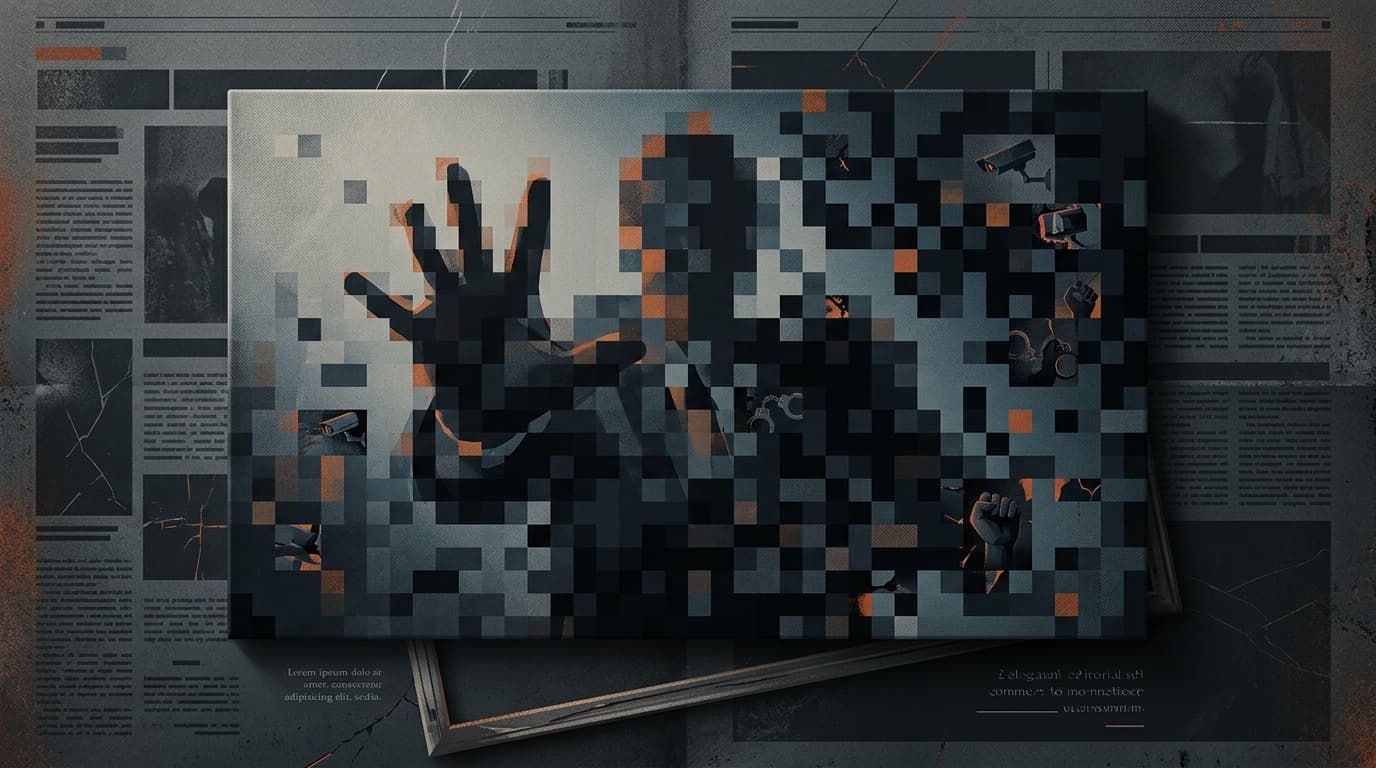
1. A Magnifying Glass Masquerading as an Eraser: The Paradox of Concealment
In a prime-time television drama, a heated argument erupts across a family kitchen table. A character, trembling with rage, grabs an ordinary kitchen knife from the counter. Instantly, an opaque cluster of digital tiles—a pixelated mosaic—descends over the actor's hand and the blade. Under bureaucratic broadcasting codes, the moment an everyday cooking utensil is wielded in conflict, it is classified as a "dangerous weapon."
In that single instant, an ordinary domestic dispute is abruptly transformed into what looks like the harrowing climax of a grisly massacre. Rather than focusing on the dramatic tension, viewers are involuntarily fixated on the disfigured screen, wondering: Just how horrifying is the object beneath that blur? The same absurdity plagues webtoons and comics: when platform censors blurred kitchen and sashimi knives in crime thrillers, readers mocked the result as "pixelated lightsabers," noting that the opaque blotch made everyday blades look like horrific disembowelment tools.
The same absurdity unfolds with cigarettes. When a character's tobacco cigarette is aggressively smudged out, the distorted visual leaves the character appearing to inhale from an ominous drug apparatus or some vulgar, illicit object. In games and comics, when censors brush thick black bars across blood splatters or slap checkerboard grids over battle wounds, human cognition does not read the scene as "clean." Instead, the mind fills the void with the most grotesque visions imaginable—imagining ruptured intestines, mangled flesh, and sickening gore.
The official justification given by regulatory agencies for mosaic censorship has always been simple: "To protect the general public and vulnerable youth from harmful visual stimuli."
Yet the history of visual culture proves the exact opposite.
In cognitive psychology, the human visual system possesses an instinctive drive to complete fragmented shapes and resolve missing sensory data—a principle known as Gestalt Closure. When confronted with an artificial pixel void, the human brain does not simply ignore it; it frantically mobilizes its own deepest anxieties, morbid fascinations, and erotic imaginations to fill the blank space.
The mosaic is not an eraser that wipes away harmfulness. It is an attention-grabbing magnifying glass and a cognitive trigger that supercharges human curiosity, turning the mundane into the monstrous and the sensual into the grotesque.
2. The Global Geography of Mosaic Censorship: How Different Regimes Treat the Screen
Across the globe, how governments treat the digital screen reveals their underlying philosophy toward adult autonomy and free expression:
[Western Democracies (US / Europe)]
"Adults have the right to view intact art."
→ Screens remain unvandalized; protection relies on strict Age Gates and content classification.

[East Asian Paternalism (Japan / South Korea)]
"Even adults will be corrupted if they look directly."
→ Mandatory pixel destruction and blurring imposed even on verified adult content.

[Authoritarian Ideology (China)]
"Visual reality must conform to state moral dogma."
→ Beyond mosaics: surreal physical replacement (green blood, bread/dough pasted over undead skeletons).
1) Japan: The Ghost of Penal Code Article 175 and the Mosaic Industry
Paradoxically, the nation that turned pixelation censorship into a highly industrialized, multi-million dollar technological craft is Japan—one of the world's most prolific creative powerhouses.
- The Origin in 1907: The root of Japanese mosaic censorship lies in Article 175 of the Penal Code, enacted during the Meiji era in 1907, which criminalizes the "distribution of obscene objects." Because judicial precedent interprets the direct exhibition of human genitalia as inherently obscene, Japan's commercial adult video (AV) industry and adult visual novels (eroge) are legally compelled to obscure genital areas with mosaics or translucent blurs to exist on legal storefronts.
- The Bureaucracy of Pixel Sizes: Over decades, this gave rise to semi-private self-regulatory bodies such as the Ethics Organization of Computer Software (EOCS / Sofurin) and the Content Soft Association (CSA). These institutions issued obsessive technical handbooks specifying grid resolutions, pixel opacity levels, and automated motion-tracking standards. Entire software suites were patented solely to automate mosaic insertion.
- The Breaking Point: Today, this century-old compromise is crumbling. The advent of AI-powered deep-learning "demosaicing" tools has rendered pixel obfuscation technologically obsolete, sparking a legal war of attrition between modders and authorities. Concurrently, Western financial intermediaries (Visa, Mastercard) have begun wielding extraterritorial payment blocks against Japanese platforms (such as DLsite and DMM/Fanza), regardless of whether mosaics are present. Japan's mosaic system now stands as a bizarre historical relic, battered by both advancing algorithms and transnational financial censorship.
2) South Korea: Paternalistic Guardianship That Denies Adults the Original
In South Korea, two powerful statutory bodies—the Korea Communications Standards Commission (KCSC) for broadcasting and internet communications, and the Game Rating and Administration Committee (GRAC) for digital games—maintain an unusually heavy-handed, paternalistic grip on visual culture.
-
Broadcasting Overkill: On both public and cable channels, censors habitually blur kitchen knives, cigarettes, tattoos, commercial brand logos, and even peaceful protest banners during news coverage. Broadcast networks operate under perpetual fear of disciplinary fines, resulting in preemptive self-mutilation that turns everyday news reporting into an eyesore of blurry patches.
-
The Adult Rating Contradiction: The deepest contradiction lies in the gaming sector. South Korea operates an official "Teenager Restricted" (19+ / 청소년이용불가) rating category. In theory, an adult classification exists so that mature citizens, having verified their age and paid for the software, can experience artistic works without infantilization.
Yet in reality, GRAC routinely threatens or issues "Rating Denials" (equivalent to de facto distribution bans) if a game depicts unedited nudity or intense visceral combat. To survive, global developers are forced to build dedicated "Korean builds" where cleavage is darkened, blood is recolored, and bodies are slapped with pixelated tiles. The state treats its voting, tax-paying adults not as autonomous moral agents, but as fragile wards perpetually at risk of moral ruin.
3) China: Beyond Mosaics into Grotesque Cultural Replacement
Under China's National Press and Publication Administration (NPPA), visual censorship transcends mere blurring, entering the realm of dystopian surrealism.
- The Banishment of Red Blood: Red blood is strictly prohibited in video games. It must be recolored into murky green, neon purple, or opaque black fluid—or replaced entirely with sweat droplets or fluttering flower petals.
- Fleshing Out the Dead: Bare human bones, skeletons, and severed limbs are strictly banned under vague decrees against "superstition and morbid terror." In World of Warcraft, the undead Forsaken race underwent radical cosmetic surgery: exposed spinal cords and ribcages were sealed over with strange clay-like skin folds, and scattered bone piles throughout dungeons were replaced by neatly stacked burlap sacks and wheat flour bags. In China, censorship is not merely about hiding content; it is an aggressive demonstration of the state's sovereign power to distort reality itself.
4) The Western Path: Evolving from "Green Blood" to Access Isolation
The Western world did not arrive at its current framework overnight.
-
In the 1990s, Germany's USK was notorious for enforcing stringent bans on human-on-human violence, forcing Half-Life to replace human security guards with mechanical robots who sat down and shook their heads upon defeat, and turning blood green in Carmageddon. Meanwhile, Australia lacked an R18+ video game classification until 2013, leaving numerous critically acclaimed mature titles banned or heavily truncated.
-
The Paradigm Shift: Through decades of fierce constitutional debates and academic research, Western societies reached a consensus: mutilating creative works degrades artistic integrity without enhancing public safety, and the proper role of classification is isolation, not censorship.
Under the ESRB (North America) and PEGI (Europe), ratings operate on the principle of transparent information and strict age segregation. Adults are recognized as possessing the sovereign right to choose their cultural intake. The state’s duty is strictly confined to empowering parents with descriptive labels (Blood, Nudity, Strong Language) and enforcing robust Age Gates to prevent underage purchase.
3. Pixel Art vs. Pixel Violence: The Plight of Indie Creators
Nowhere is the cruelty of mosaic censorship felt more acutely than in the independent game ecosystem.
For an indie developer, the "Pixel" is an exquisite aesthetic medium. Through painstaking dot-by-dot craftsmanship, pixel artists conjure breathtaking lighting, nuanced facial micro-expressions, and rich atmospheric worlds. It is one of digital art’s purest, most expressive forms.
Yet when entering the bureaucratic labyrinth of state censorship, that same pixel is seized by administrative authorities and transformed into a blunt, destructive club: The Mosaic. In seconds, a bureaucrat's stamp obliterates months of deliberate compositional work beneath a smear of coarse, jagged tiles.
This produces a farcical, exhausting survival game for small studios:
- The "Uncensored Patch" Charade: To secure approval on global storefronts like Steam or regional platforms, indie creators submit heavily neutered, mosaic-laden versions. Simultaneously, they must maintain shadow channels on Twitter/X, Discord, or Patreon to distribute unofficial "18+ Uncensored Restorers." Developers are forced into the humiliating position of operating like bootleggers just to give players the game they actually made.
- Market Abandonment: In jurisdictions like South Korea, where submitting a mature indie title incurs millions of won in non-refundable statutory review fees alongside arbitrary censorship risks, countless international solo developers simply click "Exclude South Korea" on their store consoles. The ultimate casualty is the domestic gaming public, severed from global artistic currents by an antiquated bureaucratic wall.
4. Conclusion: Tear Down the Opaque Tile and Treat Adults as Adults
The mosaic is not a moral victory. It is nothing more than an administrative cop-out born of bureaucratic sloth—an admission by regulatory bodies that building robust, privacy-respecting age-verification infrastructure is simply too troublesome, so they would rather vandalize the entire population's visual field instead.
The tighter the censorship veil, the darker the public imagination becomes. When kitchen utensils appear as butcher knives, when harmless smoke turns into illicit contraband, and when an indie artist's labor is defaced into blurry static, censorship has achieved the very vulgarity it claimed to prevent.
It is time to ask: How long will democratic societies allow administrative watchdogs to treat adult citizens like toddlers who cannot look upon the human form or dramatic conflict without collapsing into moral depravity?
True cultural maturity is not achieved by plastering ugly pixelated tape across our screens. It is built by holding platforms accountable for age separation, respecting the constitutional boundary of creative expression, and returning to adult citizens the sovereign freedom to see the world as creators envisioned it. When the state removes its clumsy hand from the screen, our visual culture will finally grow up.
1. 지우개가 아닌 '돋보기': 가리는 순간 호기심은 폭발한다
대낮의 지상파 드라마에서 등장인물들이 주방 식탁을 사이에 두고 격한 말다툼을 벌인다. 격분한 인물이 싱크대에 놓여 있던 평범한 과도를 집어 드는 바로 그 순간, 화면 속 인물의 손과 칼날 위로 불투명한 픽셀 뭉치, 즉 ‘모자이크’가 덧씌워진다. 일상적인 주방 도구가 방송 심의 규정상 '위해를 가할 수 있는 흉기'로 분류되었기 때문이다.
그 순간, 평범한 주방의 실랑이는 순식간에 끔찍한 살인 사건 현장처럼 돌변한다. 시청자는 인물 간의 갈등 서사에 몰입하는 대신, "저 가려진 칼날이 대체 얼마나 흉측하길래 저러는가"에 온 신경을 빼앗긴다. 웹툰에서도 마찬가지다. 조폭이나 범죄자가 든 식칼과 회칼을 네모난 격자 타일로 가려놓자, 독자들 사이에서는 "가려놓으니 무슨 광선검이냐", "내장을 도려내는 살상 도구 같아서 열 배는 더 흉측해 보인다"는 비판과 조롱이 쏟아졌다.
담배도 마찬가지다. 등장인물이 입에 문 담배를 뿌옇게 블러 처리하자, 마치 기괴한 마약 흡입 도구나 입에 담기 힘든 외설적인 물건을 물고 있는 것처럼 시각적 왜곡이 발생한다. 웹툰이나 액션 게임에서 피를 검게 먹칠하거나 상처 부위에 네모난 격자 타일을 씌워놓으면, 독자의 뇌는 그것을 '안전한 장면'으로 인식하는 대신 '내장이 쏟아져 나온 듯한 극단적인 고어(Gore)'로 머릿속에서 재조합해낸다.
심의 규제 당국이 모자이크를 씌우는 명분은 한결같다. **"선량한 대중과 청소년을 유해하고 자극적인 시각 자극으로부터 보호하겠다"**는 것이다.
하지만 시각 매체의 역사가 증명하는 현실은 정확히 그 반대다.
인지심리학적으로 인간의 시각 인지 체계는 불완전한 형태를 마주했을 때 결손된 빈 공간을 자신의 상상력으로 능동적으로 메우려는 본능, 즉 **게슈탈트 완결성(Gestalt Closure)**을 지닌다. 가려진 픽셀은 유해성을 지워주는 지우개가 아니다. 인간의 호기심과 불안, 성적·폭력적 상상력을 극한까지 자극하여 대상을 더욱 끔찍하고 음란하게 증폭시키는 ‘시각적 돋보기’이자 기폭제로 작동할 뿐이다.
2. 세계의 모자이크 센서십: 화면을 대하는 각국의 기형과 현실
콘텐츠와 성인을 대하는 철학에 따라, 전 세계 각국의 화면 검열과 모자이크 정책은 극단적인 대조를 이룬다.
[서구권 (미국·유럽 등)]
"성인은 원본을 볼 온전한 권리가 있다."
→ 화면 훼손 전면 배제, 철저한 연령 확인(Age Gate)과 등급 고지 중심

[동아시아 (일본·한국)]
"성인이라도 직접 보면 타락한다."
→ 성인물조차 국가·행정이 화면 자체를 물리적으로 파괴하도록 강제 (모자이크/먹칠)

[권위주의 (중국)]
"국가 이데올로기에 위배되는 시각물은 존재할 수 없다."
→ 모자이크를 넘어선 기괴한 치환 (초록색 피, 해골에 빵 반죽과 살점 덧씌우기)
1) 일본: 메이지 시대 형법 175조의 망령과 '모자이크 산업'의 딜레마
세계에서 모자이크 검열을 가장 고도화되고 체계적인 '산업'의 경지로 발전시킨 나라는 역설적이게도 콘텐츠 강국인 일본이다.
- 1907년의 족쇄: 일본 모자이크 규제의 기원은 메이지 시대(1907년) 제정된 **일본 형법 175조(외설물 반포 등의 죄)**에 있다. 판례상 성기 노출을 '음란물'로 규정하여 형사 처벌하기 때문에, 일본의 성인용 영상물(AV)과 성인 게임(에로게)은 합법적으로 유통되기 위해 성기 부위에 모자이크나 블러를 의무적으로 처리해야 한다.
- 픽셀 크기까지 규정하는 행정: 이로 인해 영상윤리협회(영륜), 컴퓨터소프트웨어윤리기구(EOCS) 등의 민간 자율규제 기구들이 설립되어 화면의 격자 크기, 투명도, 움직임 추적 기준까지 꼼꼼히 규정하는 기현상이 수십 년간 이어졌다. 일본에서는 화면을 최대한 가리지 않으면서 심의를 통과하기 위한 모자이크 특허 기술까지 발전했다.
- 임계점에 달한 모순: 그러나 최근 AI 기반 딥러닝 기술로 모자이크를 벗겨내는 '디모자이크(Demosaic)' 프로그램이 확산되면서 창작자와 단속 당국 간의 무의미한 기술 소모전이 벌어지고 있다. 여기에 비자(Visa)·마스터카드 등 글로벌 금융사들이 모자이크 유무와 관계없이 일본 서브컬처 플랫폼(DLsite, DMM 등)에 결제를 차단하는 초국적 결제 검열을 가하면서, 100년 넘게 이어진 일본 특유의 모자이크 시스템은 안팎으로 거대한 존폐 위기에 직면했다.
2) 대한민국: '청불'에도 원본을 허락하지 않는 가부장적 국가주의
한국은 방송통신심의위원회(방심위)와 게임물관리위원회(게관위)라는 강력한 국가 주도 심의 기구가 대중문화를 훈육하며 가장 모순적인 모자이크 풍경을 연출한다.
-
방송의 과잉 검열: 지상파와 케이블을 가리지 않고 식칼, 담배, 타투(문신), 상표 로고는 물론, 뉴스 보도에서 범죄 현장의 평범한 소품이나 합법적인 시위 피켓 문구까지 행정 편의주의적으로 모자이크 처리된다. 심의 제재를 피하기 위한 방송사들의 강박적인 자체 모자이크는 정상적인 뉴스 전달과 영상 미학을 송두리째 파괴한다.
-
게임 심의의 모순: 게임 분야의 모순은 더욱 뼈아프다. 한국에는 엄연히 법적으로 '청소년 이용불가(19+)' 등급이 존재한다. 등급제의 존재 이유는 성인이 본인의 신분을 증명하고 대가를 지불했다면 온전한 창작물을 감상할 수 있도록 보장하는 데 있다.
하지만 게관위는 청소년 이용불가 등급의 게임에서조차 신체 노출이나 과도한 잔혹 묘사가 포함되면 '등급 거부(사실상의 유통 금지)'를 무기로 삼는다. 결국 해외 개발사들은 한국 정식 출시를 위해 신체 부위에 억지스러운 모자이크를 덧대거나, 텍스처를 먹칠하고 각도를 틀어버리는 '한국 전용 빌드'를 만들어야 한다. 성인을 스스로 사리분별할 수 있는 주권자로 보지 않고, 국가의 검열 도장 없이는 타락해버릴 유아로 취급하는 가부장적 온정주의의 민낯이다.
3) 중국: 모자이크를 넘어선 '기괴한 치환'과 사상 개조
중국 국가신문출판서(NPPA)의 시각 검열은 모자이크의 수준을 아득히 뛰어넘는 초현실적 디스토피아를 보여준다.
- 붉은 피의 박멸: 중국 유통 게임에서 붉은색 혈흔은 전면 금지된다. 피는 초록색, 보라색, 검은색 액체로 바뀌거나 아예 땀방울이나 꽃잎으로 치환된다.
- 언데드의 살 붙이기: 뼈가 드러난 해골 캐릭터는 '미신과 공포를 조장한다'는 이유로 전면 수정 대상이다. 《월드 오브 워크래프트》의 언데드 종족은 중국 심의를 통과하기 위해 드러난 척추와 갈비뼈 부위에 억지로 살점을 덧대어 찰흙 인형이나 밀가루 반죽처럼 기괴하게 덮어버렸고, 필드에 널린 해골 오브젝트는 쌀가마니와 밀가루 포대로 둔갑했다. 중국에서 검열은 시각적 가림막이 아니라, 당의 절대적 통제 권력을 화면 위에 강제로 각인시키는 '디지털 성형'이다.
4) 서구권(미국 ESRB, 유럽 PEGI): '화면 훼손'에서 '연령 분리'로
서구권 역시 처음부터 관대했던 것은 아니다.
-
1990년대 독일(USK)은 인간 살해 묘사에 극도로 민감하여 《하프라이프》의 인간 경비원을 로봇으로 바꾸거나 피를 녹색으로 바꾸도록 강제했고, 호주(ACB)는 2013년까지 성인 전용(R18+) 등급이 아예 없어 수많은 대작 게임의 발매가 금지되거나 잔혹 부위가 가려지는 난맥상을 겪었다.
-
패러다임의 전환: 그러나 오랜 헌법적 논쟁과 사회적 숙의를 거쳐 서구 사회는 확고한 합의에 도달했다. **"화면을 흉측하게 훼손하는 것은 표현의 자유를 침해하며, 등급제의 본질은 가림막이 아니라 '접근 격리'에 있다"**는 원칙이다.
현재 미국(ESRB)과 유럽(PEGI)은 성인 콘텐츠에 대해 화면을 모자이크 처리하지 않는다. 대신 '선정성(Nudity)', '폭력성(Blood & Gore)' 등의 콘텐츠 기술어(Descriptor)를 명확히 고지하고, 철저한 성인 인증(Age Gate)과 부모 보호 장치를 통해 미성년자의 접근을 차단하는 방식으로 성인의 온전한 감상권을 보장한다.
3. 픽셀 아트(Art)와 픽셀 검열(Violence): 인디 창작자의 비극
이 기괴한 검열 시스템 속에서 가장 잔인한 피해를 입는 것은 다름 아닌 인디 게임 창작자들이다.
인디 게임계에서 **'픽셀(Pixel)'**은 개발자가 한 땀 한 땀 찍어 올린 지극한 미학적 표현 언어(Pixel Art)다. 작은 도트 하나로 인물의 섬세한 감정과 세계의 밀도를 완성해내는 고도의 예술적 조형 행위다.
하지만 관료적 검열의 세계로 들어서는 순간, 행정 권력은 그 픽셀을 가장 무성의하고 폭력적인 '지우개(Mosaic)'로 둔갑시킨다. 창작자가 수개월간 피땀 흘려 조형한 화면 위에 몇 번의 행정적 클릭으로 네모난 흉터를 찍어 누르는 것이다.
자금력과 법률 대응 능력이 부족한 글로벌 인디 개발자들은 이 모자이크 규제 때문에 기형적인 생존 줄타기를 강요당한다.
- '언센서드(무삭제) 패치'의 촌극: 스팀(Steam) 본편에는 심의 통과를 위해 온건한 모자이크 버전을 올려두고, 개발자 개인 트위터나 디스코드, 패트리온을 통해 "무삭제 성인 패치"를 비공식적으로 다운로드받게 유도하는 웃지 못할 꼼수가 일상화되었다. 개발자가 자신의 게임을 온전히 서비스하기 위해 해적판 배포자처럼 숨어들어야 하는 촌극이다.
- 시장 포기와 지역 락(Lock): 한국처럼 성인 게임 하나를 심의받는 데 수백만 원의 비용을 요구하고 불투명한 잣대로 모자이크를 강요하는 시장에 대해, 수많은 해외 인디 개발자들은 아예 '한국 지역 판매 제외' 버튼을 눌러버린다. 결국 피해는 온전한 원본을 즐길 권리를 박탈당한 국내 게이머들에게 고스란히 돌아간다.
4. 결론: 네모난 픽셀을 치우고, '어른을 어른으로 대하는 사회'로
모자이크는 도덕의 승리가 아니다. 그것은 **"미성년자를 보호할 정교한 접근 차단 시스템을 마련하기 귀찮으니, 아예 온 국민의 눈앞을 짓뭉개놓겠다"**는 검열 행정의 나태함이자 무책임한 타협일 뿐이다.
가릴수록 세상은 더 흉포해지고, 가릴수록 인간의 상상은 더 음란해진다. 주방의 식칼이 살인 무기로 보이고, 담배가 마약으로 둔갑하며, 창작자의 픽셀 아트는 관료의 행정 도장 아래 짓뭉개진다.
이제 우리 사회도 진지하게 자문해야 한다. 언제까지 국민을 '불투명 타일이 없으면 타락해버릴 유아' 취급할 것인가?
진정한 문화 선진국으로 나아가는 길은 화면 위에 흉측한 모자이크를 덧칠하는 것이 아니다. 철저한 사후 책임과 투명한 연령 분리 시스템을 정착시키고, 성인에게는 창작자가 의도한 온전한 원본을 감상할 자유를 온전히 돌려주는 데 있다. 네모난 타일 뒤에 숨은 검열관의 손을 치울 때, 비로소 우리의 시각 문화는 성숙해질 것이다.
이 기사가 마음에 드셨나요?
동료나 커뮤니티에 원클릭으로 쉽게 복사하여 공유할 수 있습니다.
댓글
GitHub 계정으로 로그인하여 댓글을 남기거나 반응(이모지)을 남기실 수 있습니다.